
At the end of this post, you’ll find a free PDF to help your child follow along at Mass: Mass Prayers & Responses
The First Eucharist: Jesus Gives Us a Gift
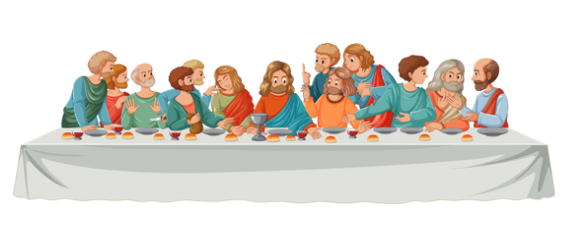
Jesus gave us this special sacrament on Holy Thursday, at the Last Supper. He said very special words about the bread and wine:
“Take and eat, this is my Body, which will be given for you.”
With these words, Jesus was preparing for His great Sacrifice on the Cross, which would happen the next day, Good Friday.
A very important command
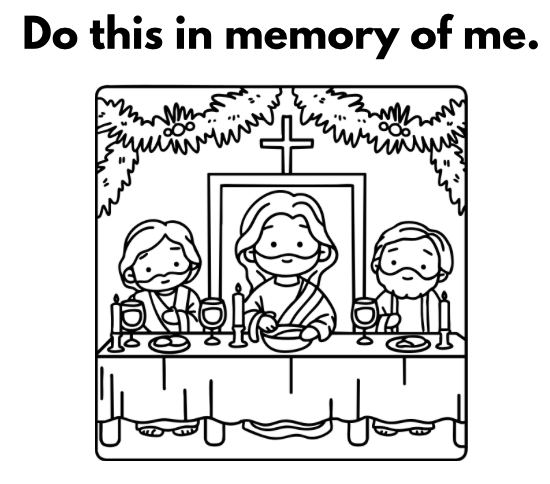
After speaking about the bread and wine, Jesus said:
“Do this in memory of me.”
This means that the apostles were to always make present what Jesus did that night. This act is called the Eucharist. The Eucharist is what we celebrate at every Mass.
The Eucharist Is More Than a Memory
When we think about birthdays or holidays, we remember them with joy — but they don’t actually happen again.
The Eucharist is different. By the power of Jesus’ words and His command, every time we celebrate Mass, His one Sacrifice on the Cross and His Resurrection become present.
Isn’t that amazing? At Mass, we are saved by Jesus as if we were right there at the foot of the Cross, with the Virgin Mary, St. John, and the other disciples.
So.. what is Mass?
Mass is the celebration of the Eucharist. It is when Jesus’ Sacrifice and Resurrection are made present for us, and we receive Him in Holy Communion.
Bread and Wine: Signs of God’s Love
In every sacrament, God uses visible signs to give us His grace—like water in Baptism or oil in Confirmation. At the Last Supper, Jesus chose bread and wine as these visible signs.
Bread and wine are gifts of the earth and of human work.
The bread used at Mass is called a host, which means “victim,” and it reminds us of the Sacrifice of Jesus.
Jesus Is Truly Present in the Eucharist
The words of Jesus are very powerful. That is why, when the priest says in His name:
“This is my Body… This is the chalice of my Blood”
something wonderful happens.
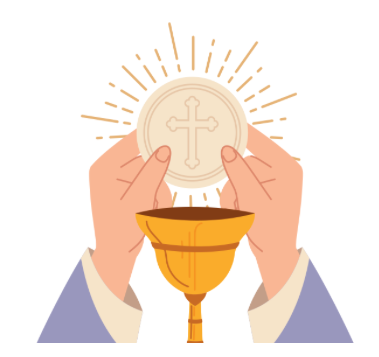
From that moment, even though the bread still looks like bread and the wine still looks like wine, they are no longer the same: they have truly become the Body and Blood of Christ.
This change is called transubstantiation — a big word that means something simple: the bread and wine truly become Jesus, even if they still look the same.
Jesus, who had the power to create the world out of nothing, also has the power to transform the bread and wine into Himself. That is why in the Eucharist, Jesus is really present — alive and risen — with His Body, Blood, Soul, and Divinity.
Jesus Stays With Us
After Mass, Jesus remains in the consecrated Hosts. These Hosts are kept in a special place called the tabernacle. The Eucharist is kept there so it can be brought to the sick and so we can pray to Jesus, who waits for us.
That’s why we genuflect when we enter church — to honor Jesus truly present in the tabernacle.
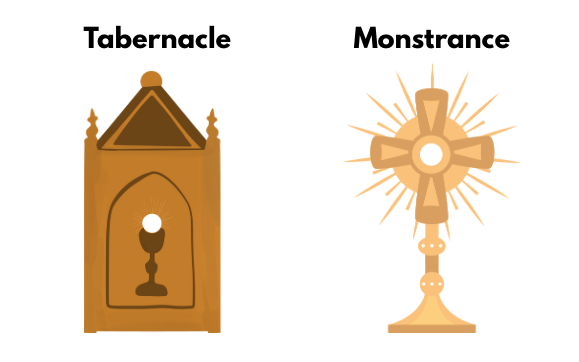
Sometimes the Eucharist is placed in a special vessel called a monstrance so we can see Him and adore Him.
This is called Eucharistic Adoration. Visiting Jesus in the tabernacle or during Adoration is one of the most beautiful ways to prepare for Holy Communion.
The Mass Step by Step: Meeting Jesus Like the Disciples of Emmaus
When we go to Mass, something very special happens: we meet Jesus, just like the disciples of Emmaus did when He appeared to them after the Resurrection.
To begin, you can read the story of the disciples on the road to Emmaus:
Luke 24:13–35
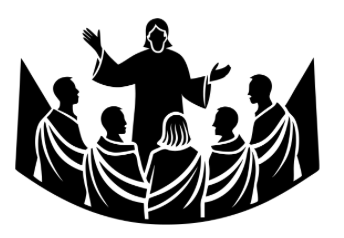
Now that very day two of them were going to a village seven miles from Jerusalem called Emmaus, and they were conversing about all the things that had occurred.
And it happened that while they were conversing and debating, Jesus himself drew near and walked with them, but their eyes were prevented from recognizing him. He asked them, “What are you discussing as you walk along?” They stopped, looking downcast.
One of them, named Cleopas, said to him in reply, “Are you the only visitor to Jerusalem who does not know of the things that have taken place there in these days?” And he replied to them, “What sort of things?”
They said to him, “The things that happened to Jesus the Nazarene, who was a prophet mighty in deed and word before God and all the people, how our chief priests and rulers both handed him over to a sentence of death and crucified him. But we were hoping that he would be the one to redeem Israel; and besides all this, it is now the third day since this took place. Some women from our group, however, have astounded us: they were at the tomb early in the morning and did not find his body; they came back and reported that they had indeed seen a vision of angels who announced that he was alive. Then some of those with us went to the tomb and found things just as the women had described, but him they did not see.”
And he said to them, “Oh, how foolish you are! How slow of heart to believe all that the prophets spoke! Was it not necessary that the Messiah should suffer these things and enter into his glory?”
Then beginning with Moses and all the prophets, he interpreted to them what referred to him in all the scriptures.
As they approached the village to which they were going, he gave the impression that he was going on farther. But they urged him, “Stay with us, for it is nearly evening and the day is almost over.” So he went in to stay with them.
And it happened that, while he was with them at table, he took bread, said the blessing, broke it, and gave it to them. With that their eyes were opened and they recognized him, but he vanished from their sight. Then they said to each other, “Were not our hearts burning [within us] while he spoke to us on the way and opened the scriptures to us?”
So they set out at once and returned to Jerusalem where they found gathered together the eleven and those with them who were saying, “The Lord has truly been raised and has appeared to Simon!”
Then the two recounted what had taken place on the way and how he was made known to them in the breaking of the bread.
At every Mass, Jesus comes to us in His Word and in the Eucharist.
Let’s look at the parts of the Mass together:
Introductory Rites: Jesus Came to Meet Them
Like He did with the disciples of Emmaus, Jesus comes to meet us at the beginning of every Mass. These prayers and actions prepare our hearts to celebrate well.
- Sign of the Cross and Greeting – we begin in God’s name.
- Penitential Act – we ask God’s forgiveness.
- Gloria – we praise the Father, Son, and Holy Spirit (on Sundays and feasts).
- Opening Prayer (Collect) – the priest gathers our prayers and asks God’s help.
Liturgy of the Word: Their Hearts Burned Within Them

On the road to Emmaus, Jesus explained the Scriptures and made their hearts burn with love. At Mass, He does the same for us!
- First Reading – usually from the Old Testament.
- Responsorial Psalm – we respond to God’s Word with prayer.
- Second Reading – usually from the New Testament letters.
- Gospel – we stand to listen to Jesus speaking to us.
- Homily – the priest or deacon helps us understand God’s Word.
- Creed – we profess our faith.
- Prayers of the Faithful – we pray for the needs of the Church and the world.
Liturgy of the Eucharist: They Recognized Him in the Breaking of the Bread
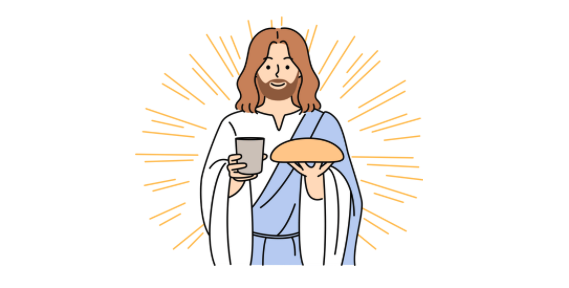
This is the most important part of the Mass. Just as at the Last Supper, Jesus takes bread and wine, gives thanks, breaks it, and gives it to us.
- Offertory – bread and wine are brought to the altar.
- Consecration – the priest repeats Jesus’ words; the bread and wine become His Body and Blood. (We kneel in adoration.)
- Breaking of the Bread – the Host is broken, reminding us that Jesus gives Himself fully. We sing Lamb of God.
- Holy Communion – those who are prepared receive Jesus with reverence and love.
Concluding Rites: They Ran to Tell the Others
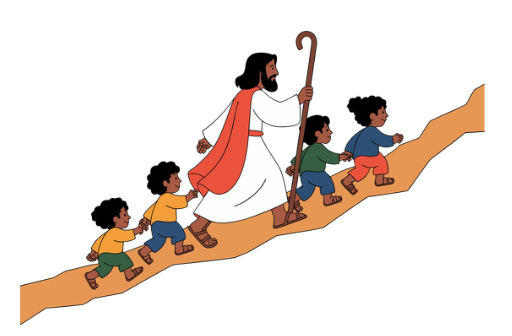
Like the disciples of Emmaus, who ran to tell the others they had seen the Lord, we too are sent out at the end of Mass to share Jesus with the world.
- Prayer after Communion – we thank God for His gift.
- Final Blessing – the priest blesses us.
- Dismissal – when the priest or deacon says “Go in peace,” he is not only telling us the Mass is over — he is sending us out as missionaries, to bring the joy of the Gospel and the love of Jesus to everyone we meet.
Jesus Invites Me to Mass!
Every time we go to Mass, Jesus meets us, speaks to us, gives Himself to us, and sends us out with joy. What a beautiful gift — to be with Him and share His love with others!
Free Resource for Families
Mass Prayers & Responses – a printable sheet with the prayers, responses, and songs for easier participation.
If you’d like to download a weekly Mass Journal for Kids, where your child can reflect and participate at every Mass, you can get it by visiting this post.